



Glass Glazing
Toughened & laminated safety glass
Different glass constructions for impact behaviour and retention after breakage.
- Toughened glass options
- Laminated retention options
- Application-specific build-up
Product details
Different ways to respond to impact.
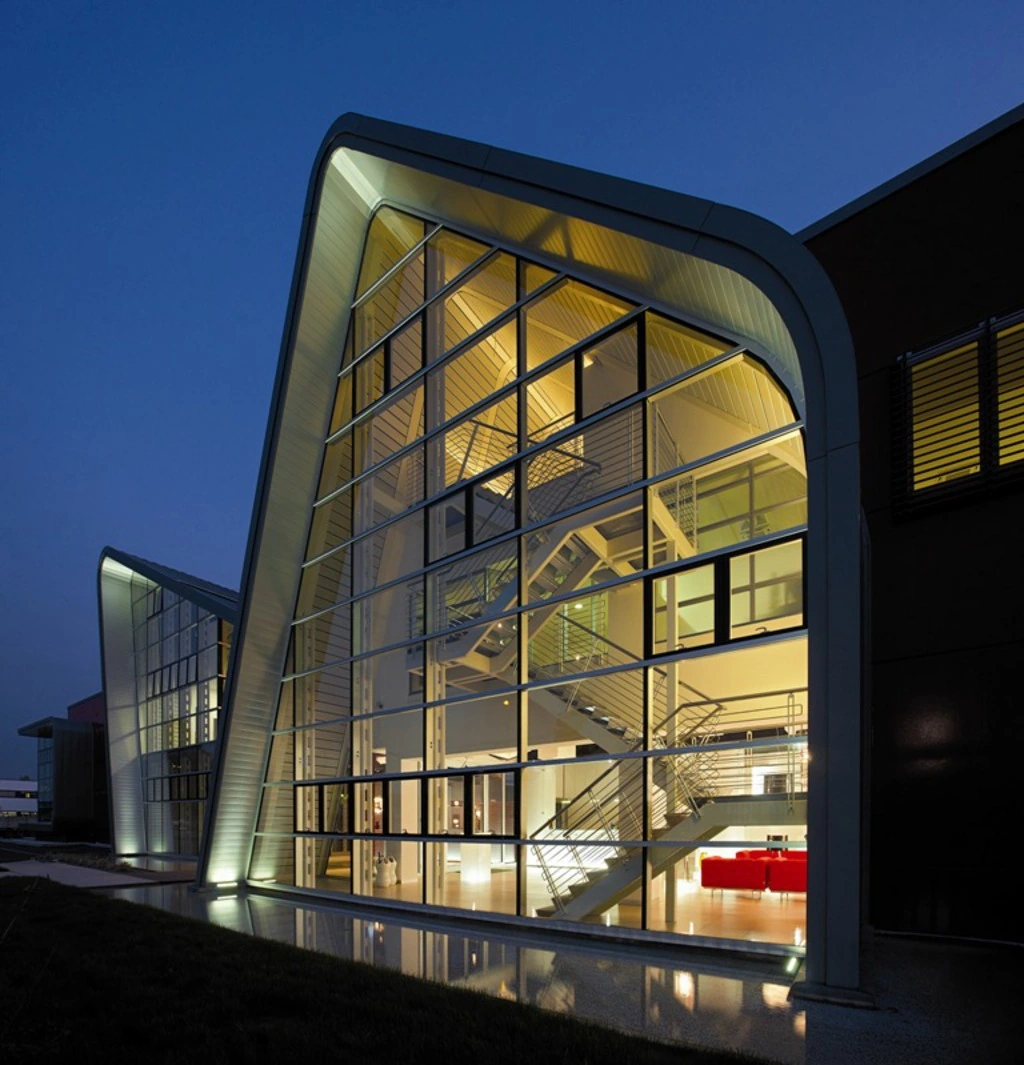 View full size
Toughened glass is heat treated and designed to break into smaller fragments. Laminated glass bonds panes with an interlayer that can retain broken fragments; the two constructions perform different roles.
Toughened laminated assemblies combine heat-treated panes with laminated construction where technically appropriate. The location, dimensions, supports and safety requirements determine the right build-up.
Inside the construction
Look a little closer.
Open the drawings to inspect frame, glass and fixing details.
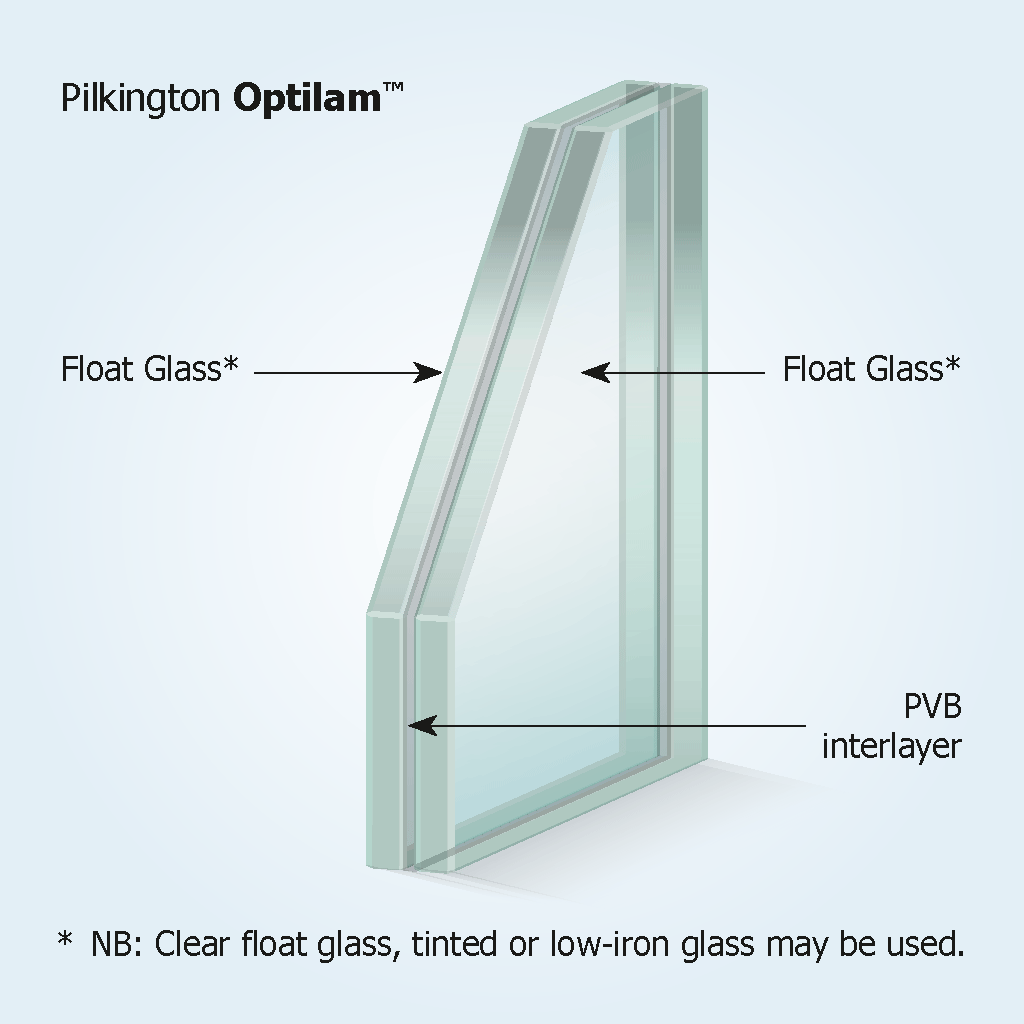
Laminated glass build-up
Pilkington Optilam shown as a representative laminated construction: two glass panes joined by a PVB interlayer. It is not a toughened-glass or complete window section.
 Open full-size
Specification
At a glance.
- Toughened glass
- Heat-treated glass with a different breakage pattern
- Laminated glass
- Bonded panes with an interlayer for fragment retention
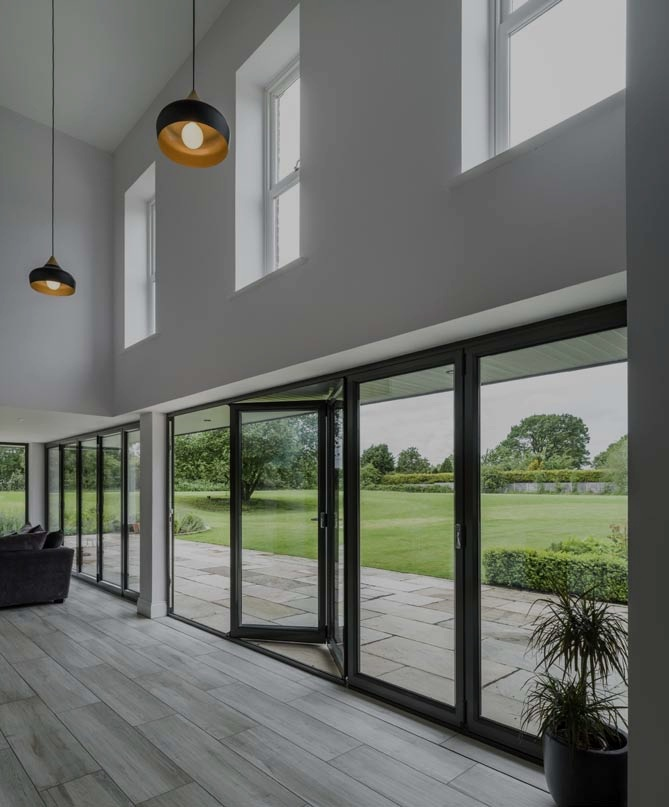
Thermal double & triple glazing
Compare glass-unit choices for heat retention, thickness and weight.
Explore product
Acoustic glazing
Glass specifications designed around the kind of external noise you want to reduce.
Explore product
Solar-control glazing
Selective coatings that balance useful daylight with incoming solar energy.
Explore productYour project
Identify the glass application.
Show where the glass will sit, its approximate dimensions and how it is supported. Flag door, low-level, overhead or other safety-sensitive locations so the appropriate construction can be reviewed.
Discuss Toughened & laminated safety glass